
Industry News
The Data Center Water Boom Nobody’s Talking About in Pump Circles — Yet

Craig Kennedy
CEO | RWN PUMP & FABRICATION
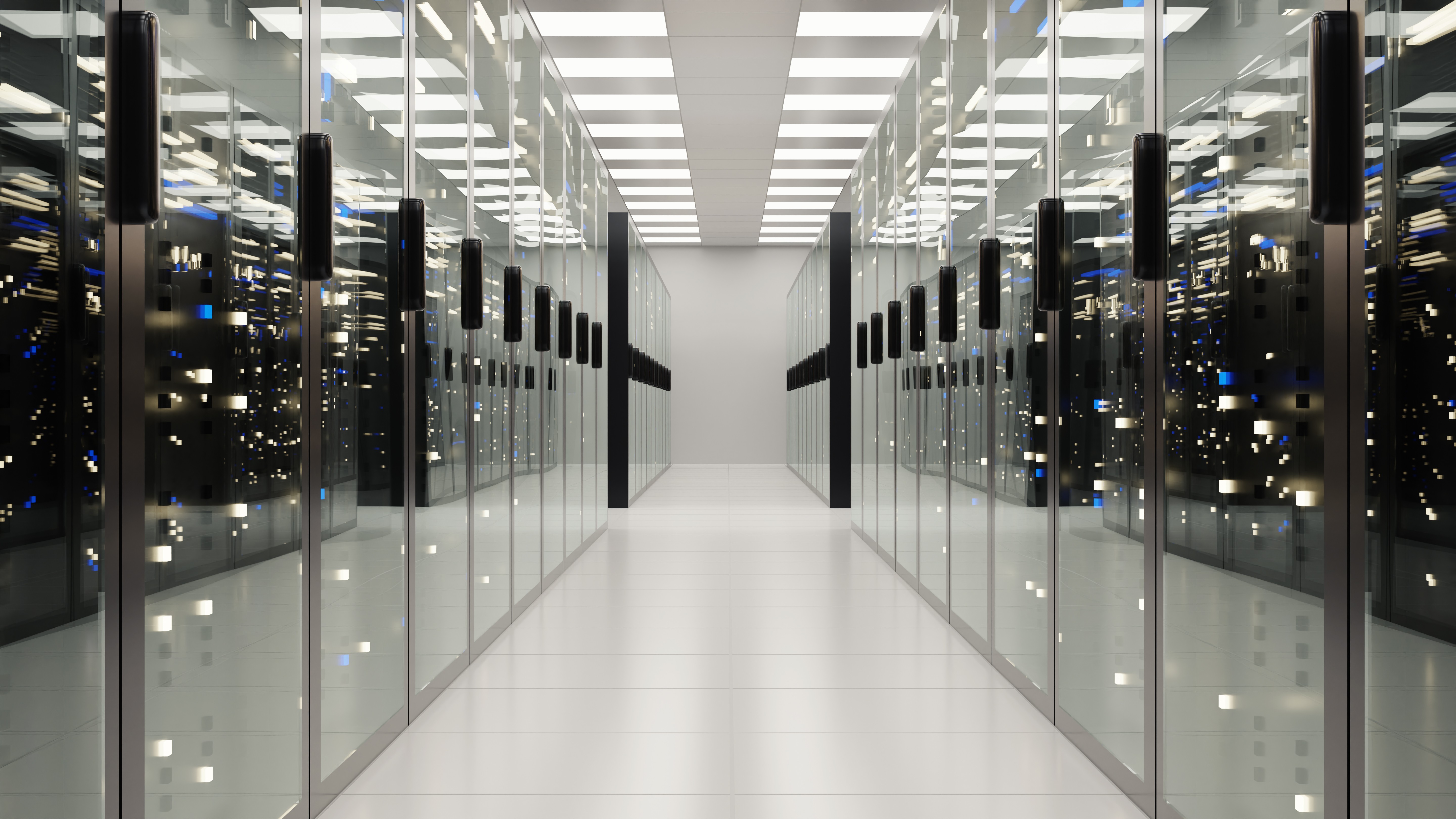
If you read the technology press in 2026, the data center story is about AI training clusters, power grids, and chip supply chains. If you read the infrastructure press, the same story sounds very different: it is about water.
UC Riverside research published in March projects that data center cooling demand will drive $10 billion to $58 billion in new U.S. waterworks investment by 2028. WestWater Research expects U.S. data-center water consumption to rise 170% over the same period. Annual direct consumption is projected to grow from 17.4 billion gallons in 2023 to between 38 and 73 billion gallons by 2028.
And here is the part that pump fabricators and rental fleet managers should be sitting up straight for: that water doesn’t flow on existing infrastructure. It moves on pump packages — temporary, permanent, sound-attenuated, dewatering, transfer, makeup. The hyperscale construction boom is reshaping the industrial pump conversation in ways most vendors have not yet built a playbook around.
The Numbers That Should Move Capex Plans
Hyperscale data centers operate at a scale most fluid-handling specifiers have not benchmarked against before. On a hot summer day, a large data center can withdraw more than a million gallons of water in 24 hours. Facilities under construction have been allocated up to eight million gallons per day — enough to supply multiple small towns.
Daily water demand from evaporative cooling systems can spike six to ten times higher than average usage. For some planned facilities, peak demand exceeds 30 times average. That kind of variance forces municipal utilities — most of them local government entities — to build infrastructure capable of handling the peaks even if the capacity is rarely fully used.
In February 2026 alone, three major technology companies announced they had secured multi-million-gallon-per-day water allocations for projects in Virginia, Louisiana, and Indiana, with the total water infrastructure cost approaching $1 billion across those three projects.
And every one of those projects, before it ever pumps a drop of cooling water, has to be dewatered for excavation, supplied with construction water, and staged through 18–30 months of build activity that requires industrial fluid handling at a scale most general contractors have never specified before.
Three Distinct Pump Conversations Inside Every Hyperscale Build
What is sometimes missed in the data-center-pump discussion is that there isn’t one pump conversation — there are three, all on the same project, often happening in different procurement silos.
1. Construction-phase dewatering and water transfer
Site dewatering for foundation excavations on data centers that can occupy 50–500 acres of footprint.
Construction water transfer for concrete pours, soil compaction, dust suppression.
Temporary site dewatering during groundwater management for utility tunnel installations.
Duration: 12–30 months, often continuous. Rental fleet plays prominently here.
2. Permanent cooling-loop and makeup-water infrastructure
Cooling tower makeup pumps that match peak-day demand spikes 6–10x above average.
Closed-loop liquid cooling distribution units (CDUs) for direct-to-chip cooling — a category that is exploding in 2026 with AI rack densities pushing 80 kW.
Emergency backup and redundancy pumps that must run for 72-hour outage scenarios.
Duration: 15–20 year operating life. Custom fabrication and engineered packages dominate here.
3. Site water management and stormwater
Stormwater retention and discharge for sites whose impervious surface coverage permanently changes local hydrology.
Process water filtration and reuse loops, increasingly demanded by water-stressed jurisdictions (Phoenix’s Maricopa County now imposes water-use restrictions on new data-center developments).
Long-term filtration vessel installations integrated with municipal water systems.
Duration: ongoing facility life. Mixed custom fabrication and OEM components.
The Sound and Setback Reality
Hyperscale data centers are no longer being built in remote rural areas. They are increasingly located adjacent to residential and mixed-use development — close enough to existing fiber and grid infrastructure to be viable, close enough to communities that noise and water-use ordinances apply.
That changes the pump specification fundamentally. Standard industrial pump packages running 95–105 dBA cannot operate within typical residential setbacks. Sound-attenuated enclosures, vibration-dampened skids, and exhaust silencer systems are baseline requirements on most hyperscale-adjacent pump specs.
And because much of the work happens on continuous-duty schedules — nights, weekends, holidays — the noise compliance burden is heavier than a typical construction site. A pump package that violates the local ordinance triggers stop-work orders that cost the GC hundreds of thousands of dollars per day in schedule slippage.
Microsoft’s Zero-Water Pilot and What It Doesn’t Change
Microsoft’s announcement of zero-water evaporated cooling pilots in Phoenix and Mt. Pleasant, Wisconsin, has generated significant industry attention. Closed-loop liquid cooling that recycles water through sealed networks rather than evaporating it can save up to 125 million liters annually per facility.
It is a genuine innovation. It is not, however, an end to industrial pump demand at data centers — it is a redistribution.
Zero-water evaporated designs still require pumps. Closed-loop systems still need filtration, makeup for system losses, and emergency backup capacity. Construction-phase dewatering and water-transfer demand is unchanged — a zero-water-cooling data center is still a massive excavation project that needs to be kept dry during the build.
And not every site qualifies for zero-water designs. Most existing hyperscale fleet still uses evaporative cooling, and the retrofit cycle to closed-loop will play out over a decade or more. The bulk of 2026–2030 demand is still on conventional pump-driven cooling infrastructure.
What Pump Vendors Should Be Doing in 2026
For fluid-handling specifiers, fabricators, and rental fleet operators, three preparatory moves separate the vendors who will capture the hyperscale opportunity from those who will watch it pass:
1) Build a construction-phase playbook. The customer for the first 18–24 months of a data-center pump conversation is not the data-center operator — it is the general contractor. The procurement cadence, the documentation requirements, the field-service expectations, and the rental-versus-purchase logic are all different from the operator-side conversation. Develop sales and engineering teams who understand both.
2) Lead with sound and setback engineering. Every hyperscale site is sensitive to noise. Vendors who default-spec sound attenuation, who can document dBA performance at distance under load, and who have a fabrication playbook for retrofit silencing on existing units will win shortlists.
3) Engineer for redundancy and uptime, not just throughput. Hyperscale operators measure pump performance in availability terms. A pump that runs at 98% uptime is not acceptable when the cost of unplanned downtime is measured in tens of thousands of dollars per hour. Documentation, predictive-maintenance integration, and engineered redundancy are the differentiators — not headline flow rates.
Frequently Asked Questions
How much water does a hyperscale data center actually use?
Large data centers can withdraw more than a million gallons of water on hot summer days. Some facilities under construction have been allocated up to 8 million gallons per day. U.S. data center direct water consumption is projected to grow from 17.4 billion gallons in 2023 to between 38 and 73 billion gallons by 2028.
Why is data center water use becoming a pump industry issue?
Peak data-center water demand spikes 6–10x above average on hot days, and at some facilities exceeds 30x. That kind of variance requires substantial pump-driven infrastructure — cooling tower makeup pumps, transfer pumps, backup and redundancy pumps, and large-scale stormwater management. UC Riverside research projects $10–58 billion in new U.S. waterworks investment by 2028 to handle data-center cooling demand, much of which depends on industrial pump packages.
What kinds of pump packages do data center construction sites need?
Hyperscale data center construction typically involves three distinct pump demand categories: 12–30 months of construction-phase dewatering and water transfer (often via rental fleet); permanent cooling-loop makeup, distribution, and backup pumps (typically custom-fabricated, engineered packages); and long-term site water management including stormwater and filtration (a mix of custom and OEM).
Will closed-loop cooling eliminate data center pump demand?
No. Closed-loop liquid cooling (including Microsoft’s zero-water evaporated cooling designs) still requires pumps for circulation, filtration, makeup for system losses, and emergency backup capacity. Construction-phase dewatering and water-transfer demand is unchanged regardless of the cooling architecture chosen for the permanent facility. The vast majority of operating hyperscale capacity through 2030 still uses pump-driven evaporative or hybrid cooling.
Do sound attenuation specs apply to data center pumps?
Increasingly, yes. Hyperscale sites are often built adjacent to residential and mixed-use development. Municipal noise ordinances commonly cap nighttime sound levels at 55–65 dBA at the property line, well below the 95–105 dBA produced by a standard diesel pump package. Sound-attenuated enclosures are a baseline expectation, not a premium upgrade, on most hyperscale-adjacent pump procurements.
More Insights

Pump Education
September 1, 2026
Electric-Driven vs. Diesel-Driven Pump Packages: Which Fits Your Application?

Fleet Management
August 18, 2026
Nuclear Construction Is Back. Here’s How Industrial Vendors Should Read a First-of-a-Kind Capital Cycle.

Pump Education
September 1, 2026