
Industry News
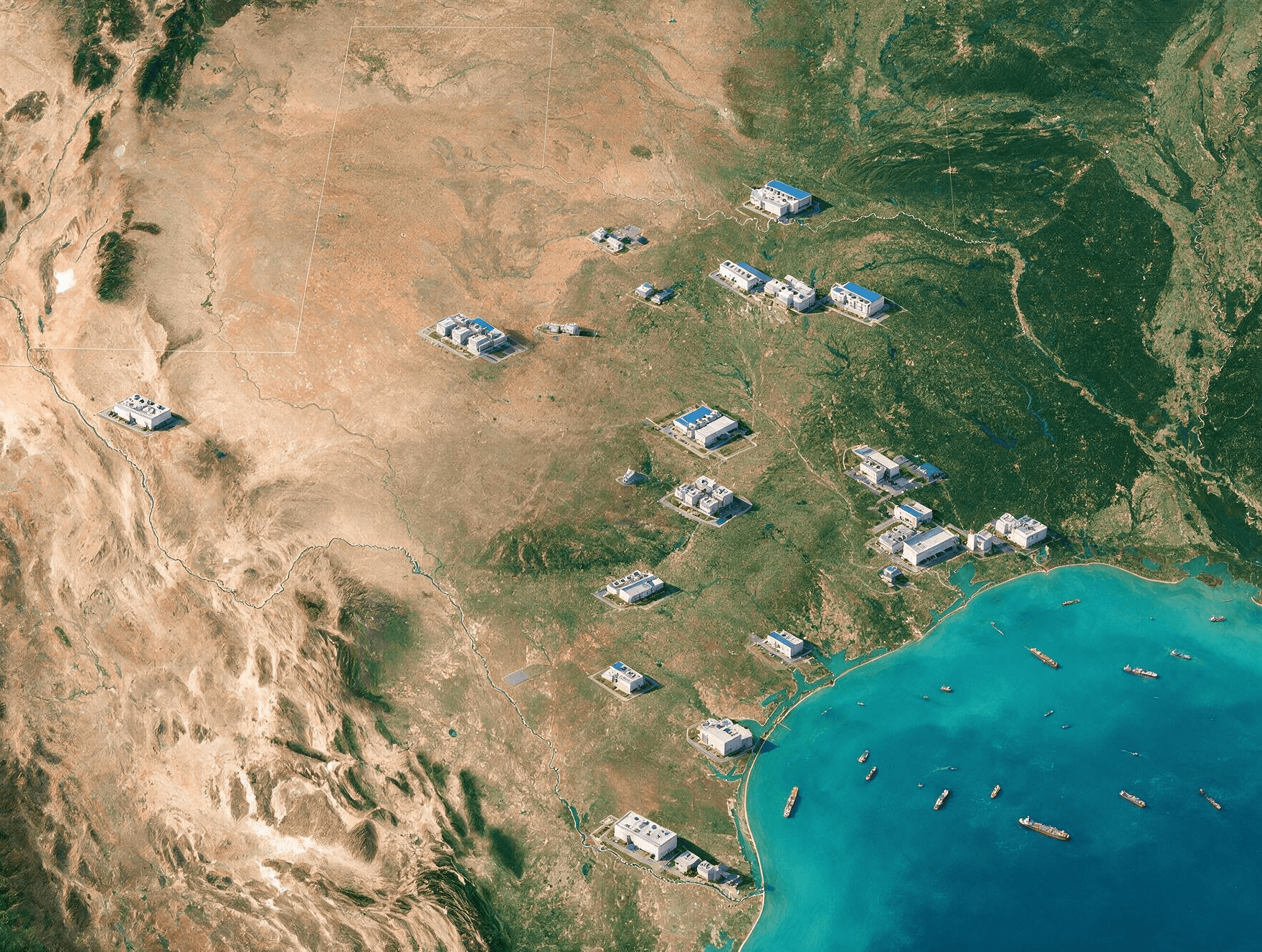
The Texas Data Center Boom Runs on Pumps: Inside the Industrial Buildout Behind 248 Projects

Craig Kennedy
CEO | RWN PUMP & FABRICATION
A tech story that's actually an industrial story
The numbers coming out of Texas read like typos. At least 248 data center projects planned statewide, per a June 2026 Texas Tribune analysis. More than 438,000 megawatts of proposed demand in ERCOT's interconnection queue — nearly ninety percent of it data centers — against a grid whose all-time peak is 85,508 MW. A late-July heat wave that had ERCOT preparing for record demand while construction continued across the state.
The headlines frame this as artificial intelligence. On the ground, it is one of the largest industrial construction programs in American history — concrete, steel, power, and water, delivered on penalty-clause schedules through Texas summers.
Power that can't wait for the grid
Because a standard grid interconnection can take years, developers are increasingly generating on site. RBC Capital Markets estimates roughly 101 GW of behind-the-meter natural gas generation announced nationally, with Texas leading at approximately 38 GW in development. Global Energy Monitor counts a record 252 GW of gas-fired capacity in development across the U.S. — about a third in Texas — while GE Vernova reports turbine delivery slots largely sold out through 2027.
Every on-site power installation is its own industrial subproject: fuel delivery and handling systems, commissioning water, bypass and redundancy provisions, and temporary power bridging the gap until permanent generation runs. The turbine shortage stretches those timelines — which stretches the demand for the temporary infrastructure that fills them.
Where the pumps come in
Underneath the gigawatt figures sits water work that any heavy-civil contractor would recognize. Mass excavation for multi-building campuses frequently runs below the water table, requiring engineered dewatering that operates continuously for months or years. Cooling systems require large volumes of transfer for fill, flush, hydrostatic testing, and commissioning. Stormwater management on hundred-acre disturbed sites demands standby pumping sized for Gulf Coast rain events. And all of it must run through ambient conditions that routinely exceed 100°F.
None of this is new engineering. It is the same hydraulics, diesel packaging, and heat-tolerant design that oil and gas support work has demanded for decades — applied to a buyer who is new to the region and, in many cases, new to the problem. The contractors winning this work will be the ones whose equipment partners have already proven they can keep water moving through a Texas August.
What builders should look for in an equipment partner
Three criteria matter more on these projects than on typical civil work: proximity (multi-year sites need same-day response, not freight schedules), fabrication capability (site conditions evolve, and packages that can be reconfigured beat packages that must be replaced), and heat-proven design (cooling and enclosure engineering sized for the actual climate, not a national average). Texas-based fabricators who built their reputations serving the oilfield check all three boxes — which is why this buildout, for all its novelty, plays directly to the state's existing industrial strengths.
Frequently asked questions
Why do data centers need pumps during construction?
Large data center campuses require construction dewatering when excavation extends below the water table, stormwater pumping across large disturbed sites, and high-volume water transfer for cooling system fill, flushing, testing, and commissioning. These needs persist across multi-year construction schedules.
What is behind-the-meter generation and why is it common in Texas?
Behind-the-meter generation means power produced on site rather than drawn from the grid. Texas data center developers are building an estimated 38 GW of it — largely gas-fired — because grid interconnection queues can take years, and on-site power lets projects energize sooner.
How big is the Texas data center construction market?
As of mid-2026, at least 248 data center projects are planned across Texas, and ERCOT has received over 438,000 MW of proposed large-load connection requests, nearly 90% from data centers. Even partial realization represents years of sustained industrial construction activity.
What should contractors consider when renting pumps for data center sites?
Prioritize suppliers with local response capability, engineering support to size equipment to actual site conditions, and equipment designed for extended runtimes in extreme heat. Multi-year site timelines also make maintenance programs and fuel efficiency more important than on short civil jobs.
More Insights

Pump Education
September 1, 2026
Electric-Driven vs. Diesel-Driven Pump Packages: Which Fits Your Application?

Fleet Management
August 18, 2026
Nuclear Construction Is Back. Here’s How Industrial Vendors Should Read a First-of-a-Kind Capital Cycle.

Pump Education
September 1, 2026